We’ve all been there: you wake up with a sore throat, headache, and general malaise. You would run to the doctor and wonder if it’s the flu, COVID, or RSV. If you’re wondering how to tell if your illness is caused by CoV (cytomegalovirus), flu (influenza virus), or RSV (respiratory syncytial virus), this guide will help!
How to distinguish COVID-19, flu, and RSV?
All three viruses, RSV, influenza (flu), and COVID-19 cause upper respiratory tract infections. These are often confused with one another, as they share many of the same symptoms. Dr. Katalin Szilárdi, General Practitioner and Family Doctor at FirstMed in Budapest, highlights some differences in how each virus presents itself that may help you tell them apart.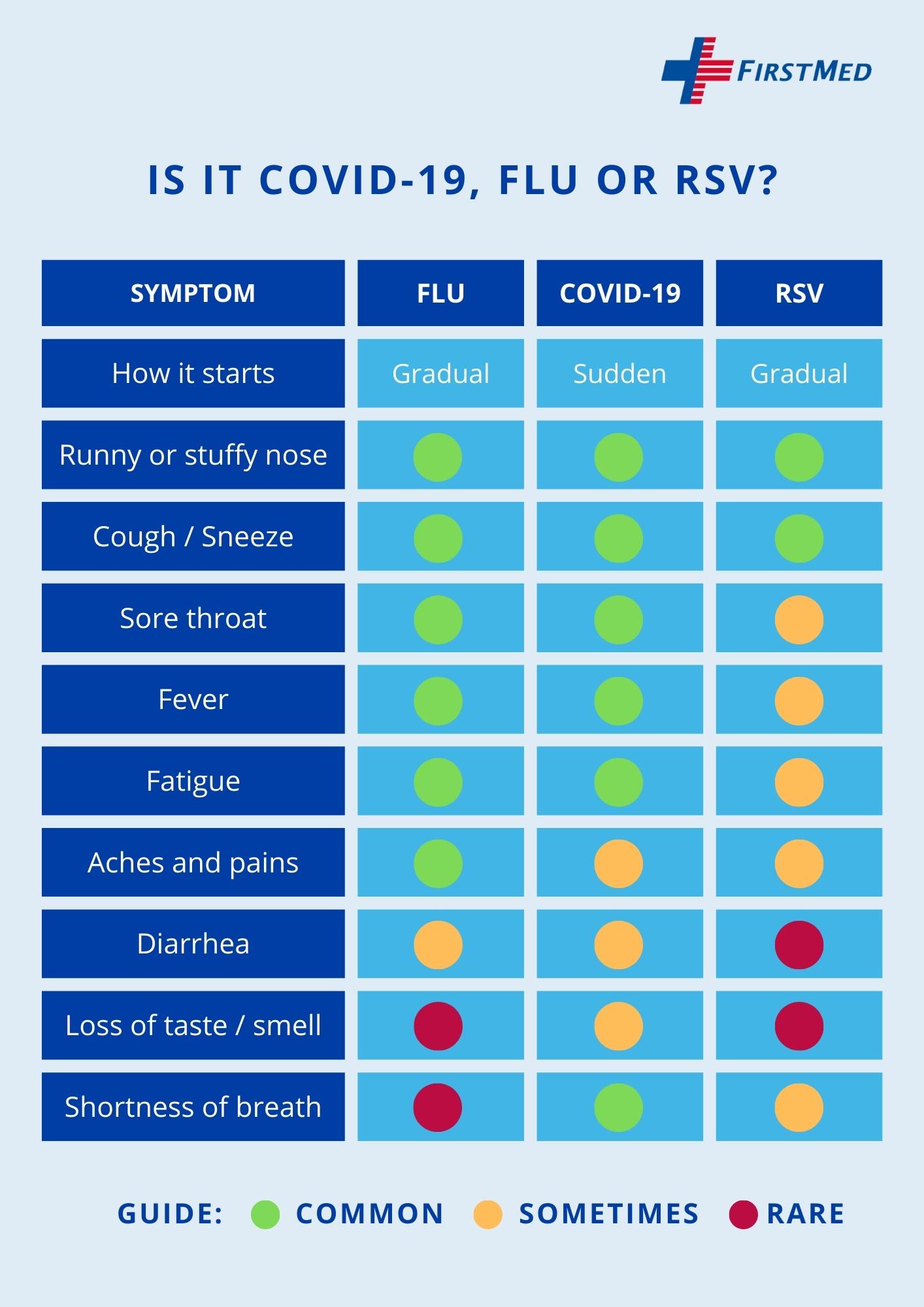
Main characteristics of influenza
The flu is caused by the influenza virus, which spreads worldwide and follows a seasonal pattern, usually beginning in the fall and continuing through spring. People with the flu are more likely to experience these symptoms below than those with COVID-19 or RSV infections:
- Coughing
- Sore throat (a scratchy feeling when you swallow)
- Sneezing (may be absent in RSV)
- Runny or stuffy nose
- High body temperature/fever
- Muscle aches, headaches, or body pains (may be absent in RSV)
- Diarrhea from the flu is more common in children.
Specific symptoms related to COVID-19
COVID-19 has specific symptoms like the lack of smell (anosmia) and lack of taste (ageusia), which are uncommon with the flu. Other symptoms may be vomiting and diarrhea. These typically occur within two weeks after exposure and last up to two days. It’s not a fever or a cough—it’s a sudden loss of appetite, nausea, and vomiting. You may also feel dizzy or weak, have trouble breathing or swallowing, or cough up blood or mucus when you vomit.
Characteristics of diseases caused by RSV
RSV affects mostly children younger than two years old and immunocompromised adults, such as elderly people. So if you have a healthy immune system, you don’t likely have to worry about it. But if you have a baby, you should know what symptoms to look for.
RSV can cause a child to have coughing, runny nose, sneezing, and fever. They may also have difficulty breathing and experience rapid breathing, wheezing or nasal flaring.
It’s important to note that the symptoms of these illnesses are all caused by respiratory viruses and thus only slightly alter. If you (or your children) don’t feel well, the best thing to do is to contact your family doctor (or pediatrician) and get tested.
How to protect yourself from infection?
There are some things you can do to protect yourself from getting sick.
Keep up a good hygiene routine:
- Wash your hands with soap and water often, especially after coughing or sneezing.
- Avoid close contact with people who are sick. This includes sharing cups, utensils, food, and cigarettes.
- Use a tissue when coughing or sneezing (and dispose of used tissues properly).
- If you are susceptible to complications from viral infections, wear a mask in crowded places and on public transportation.
Boost your immune system:
- Keep a diet rich in fruits and vegetables.
- Have enough sleep and rest.
- Reduce stress as much as possible. You can practice simple stress-reduction techniques such as meditation or yoga.
- Be active. Physical activity keeps you fit and alleviates stress, thereby improving overall health. A walk in the morning will get enough vitamin D to your body for that day. If you go for a stroll at night, it will help ensure better sleep.
The most effective way to shield yourself from these viruses is by getting vaccinated.
Flu vaccination is recommended even if you are healthy, in case you don’t have any contraindications against receiving it. The vaccines are distributed in Hungary beginning around mid-October every year. The best is if you request your flu vaccine as soon as it becomes available. If you haven’t been able to get a flu shot yet, don’t worry—it may still protect against the illness.

Protection against RSV is suggested primarily for premature babies, and little children suffering from congenital heart defects, chronic lung disease, and neurological diseases. It provides a so-called passive immunization, a process in which antibodies are injected into the body before the start of the flu season and repeated once every month between November and March. Ask your pediatrician whether your baby should be vaccinated against RSV.
COVID vaccinations are available throughout the year and recommended for everyone. For extra protection, get a booster if you haven’t had one in a while.
Does COVID-19 vaccination protect against seasonal flu?
There’s confusion about these two vaccines because they look similar and they’re both administered in a doctor’s office. The flu shot is entirely different from the COVID vaccine—you can still get sick with the flu even if you’ve been vaccinated for COVID. A flu shot protects against four types of influenza viruses, while the COVID vaccine only protects against one strain of COVID-19.
The flu vaccine is given annually and contains three or four strains of influenza A and B viruses because the influenza virus mutates frequently.
The COVID vaccine is administered every six months and protects against just one strain of COVID-19 (A/H1N1).
Where can you get vaccinated?
You can request a flu shot at FirstMed in Budapest by calling +36 1 224 9090 or submitting this form.
In Hungary, COVID-19 vaccinations are only available in the state healthcare system. If you are a foreign citizen, you should register here to take the vaccination.
What should you do if you think you are infected with one of the respiratory viruses?
If you have mild symptoms:
- Stay home if you are sick, as all these illnesses could be contagious.
- Take rest and try to sleep as much as possible.
- Drink plenty of fluids: water, juices, and herbal teas (e.g. ginger and lemon), and stay away from sugary drinks or foods that may make dehydration worse, like alcohol and caffeine.
- Wash your hands frequently with soap and warm water to avoid spreading the infection.
- Call your doctor if your symptoms do not improve within a few days. Consider having a virtual visit instead of going to the doctor’s office.
It is suggested that you take an at-home COVID-19 antigen rapid test, which is available in pharmacies. This generally detects the SARS-CoV-2 virus by high chance when someone is infected. It’s important to note that these tests are not as accurate as those performed in a laboratory, such as PCR, and may give false negative results.
The doctor may request you to have an additional PCR or Antibody test, prescribe medications, or refer you to another specialist for further examination.
Conclusion
Winter is a time when we are all in close quarters, and it’s essential to take precautions to ensure that we’re taking the best care of ourselves. There are a lot of different viruses going around, and it can be complicated to know what to look for and what to do about it.
There are a few things that are true for all of them:
- Keep your hands clean, wash your hands often,
- Avoid touching your face,
- Stay home if you feel sick,
- Get plenty of rest,
- Drink lots of water and fluids (non-alcoholic), and stay hydrated!
You should also check on any family members who may be at risk because they have underlying health conditions or are older than 65 years old. And if you think you might have one of these illnesses, don’t hesitate to see a doctor so they can help you get better quickly!